I can think of a couple examples, though they involve some pretty heavy spoilers, since this narrative device is used as part of a larger twist in each.
It’s been ages since I’ve played it, but the Gamecube RPG
Baten Kaitos: Eternal Wings and the Lost Ocean did something like this. The player directly controlled the main character, Kalas, but the player’s actual role in the game was that of Kalas’ Guardian Spirit, and you were treated as a separate character from Kalas. For example, at some points in the story Kalas or the other characters would face the screen and ask you for your thoughts/advice about a situation. Your answer would influence your relationship with the party, and if your relationship was strong, you’d have a higher chance to unleash powerful spirit attacks in the game’s card-based battle system.
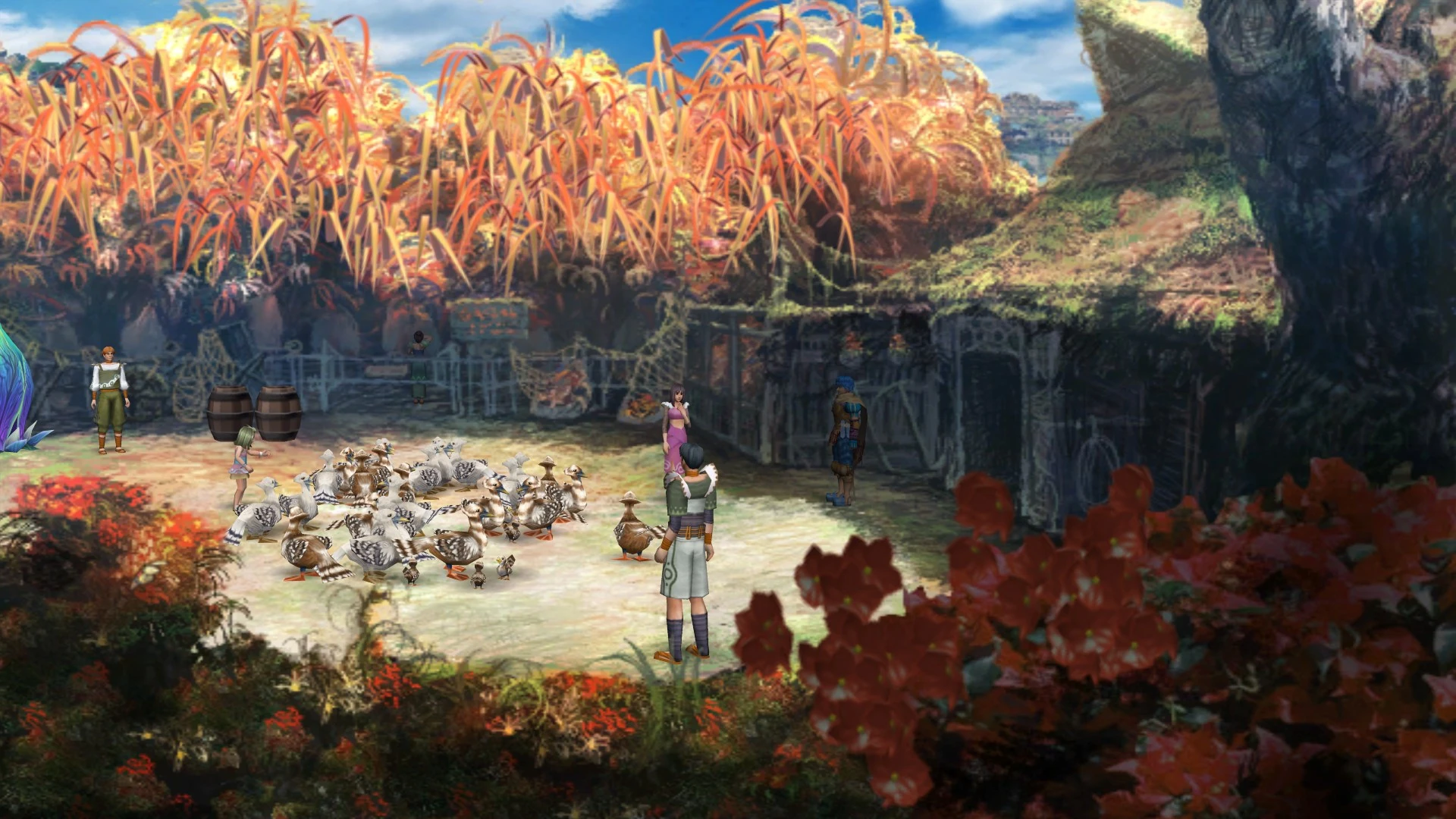
The camera perspective on some maps was also designed to convey the idea that you were watching the party from afar. For example:
https://vignette.wikia.nocookie.net...quality.jpg/revision/latest?cb=20111107055107
Finally (major spoilers for the game):
Spoiler
When it’s revealed partway through the game that Kalas has sold out the rest of the party, you can choose to say either that Kalas went behind your back as his guardian, or that you were actually conspiring together with him the whole time. Note that the moment comes as a surprise to the player either way. In this case, setting the player in the role of the Guardian Spirit creates some narrative separation between the character of Kalas and the identity of the player in the game, which makes this twist a bit easier to swallow for players who aren’t on board with Kalas’ self-serving, villainous turn. On the other hand, it’s kind of fun that the game lets you roleplay as an evil spirit if you want to.
Ultimately, the game mostly relied on this narrative device for flavor, making it more of a gimmick than a central game mechanic. There were also some unfortunate limitations that went along with it - for instance, the game let you type in a name for yourself as the spirit, but it was also fully voice-acted, and the script wasn’t written around this. So when characters addressed you, there would often be awkward pauses in the middle of their lines where they were supposed to be saying whatever you put as your name. It made a lot of those exchanges sound stilted and forced - kind of like watching a gritty, high-fantasy version of Dora the Explorer.
As a second, different example, at the end of
Bravely Default:
Spoiler
It’s revealed that the player has taken over the body of the protagonist, Tiz, and that beings like the player are known as “Celestials” in the game world. The big bad has a plan to break out of the game and into the dimension of Celestials, our world. He believes that Celestials are all-powerful beings who suffer from terrible boredom, and that’s why we spend so much time meddling with other worlds (i.e. playing games). When the villain is explaining all this to the player, the 3DS camera actually turns on to show the players their own reflection on the screen. Ultimately, the player prevails against the boss by drawing power from other dimensions - the people from their Friends List who also have Bravely Default save data (or if the player has no friends with BD saves, some made-up friends that the game gives you as you progress).
In general, this approach is something I’d probably only recommend doing if it’s central to the narrative you’re trying to create - it’s a high-risk, high-reward narrative device. Executed well, it can make for tough decisions, clever twists, and highly-memorable narratives. Executed poorly, it will drag your story down with cringeworthy moments and possibly even make the player resent their own role in the narrative. Personally, it’s something I’d choose to skip more often than not when writing a story.