First images will start appearing @ 09:00 CET, 08:00 UT, 03:00 EST, 02:00 CST, <br />01:00 MST & 00:00 PST.<br /><br />The encounter was a complete 100% success, so Earth observations were taken & now Rosetta<br />is observing the Moon. <br /><br />Rosetta has / is performing extremely well.<br /><br />Rosetta was spotted last night from the Starkenburg Observatory, Heppenheim in Germany.<br /><br />If I can, I will post results from the encounter tonight on here.<br /><br />Next encounter is the small 4.6 KM wide Type E (Enstatite Achondrite, similar in <br />compostion to the Earth's mantle, but a little higher in Iron & Sulphur) Main Belt <br />Asteroid 2867 Steins on Friday 5th September 2008.<br /><br />Whilst Rosetta was passing Earth, I was observing Comet 17/P Holmes, so whilst I<br />was looking at a comet, a comet bound spacecraft was passing Earth. <img src="/images/icons/laugh.gif" /><br /><br />Andrew Brown. <div class="Discussion_UserSignature"> <p><font color="#000080">"I suddenly noticed an anomaly to the left of Io, just off the rim of that world. It was extremely large with respect to the overall size of Io and crescent shaped. It seemed unbelievable that something that big had not been visible before".</font> <em><strong><font color="#000000">Linda Morabito </font></strong><font color="#800000">on discovering that the Jupiter moon Io was volcanically active. Friday 9th March 1979.</font></em></p><p><font size="1" color="#000080">http://www.launchphotography.com/</font><br /><br /><font size="1" color="#000080">http://anthmartian.googlepages.com/thisislandearth</font></p><p><font size="1" color="#000080">http://web.me.com/meridianijournal</font></p> </div>
ESA Rosetta to 67P/Churyumov-Gerasimenko.
Our Solar SystemFirst images here & here.<br /><br />Looking very good indeed. <img src="/images/icons/laugh.gif" />.<br /><br />Andrew Brown. <div class="Discussion_UserSignature"> <p><font color="#000080">"I suddenly noticed an anomaly to the left of Io, just off the rim of that world. It was extremely large with respect to the overall size of Io and crescent shaped. It seemed unbelievable that something that big had not been visible before".</font> <em><strong><font color="#000000">Linda Morabito </font></strong><font color="#800000">on discovering that the Jupiter moon Io was volcanically active. Friday 9th March 1979.</font></em></p><p><font size="1" color="#000080">http://www.launchphotography.com/</font><br /><br /><font size="1" color="#000080">http://anthmartian.googlepages.com/thisislandearth</font></p><p><font size="1" color="#000080">http://web.me.com/meridianijournal</font></p> </div>
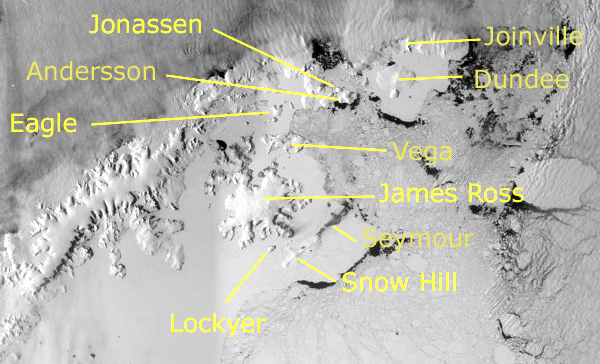
Must check these out. <img src="/images/icons/laugh.gif" /><br /><br /> Rosetta View of Earth nightside labled. <br /><br /><font color="orange">Correction</font>font color=yellow> the city labled Baghdad, Iraq is actualy Tehran, Iran.<br /><br />My wife's home city of Zhanjiang, Guangdong, China is visible behind the upright of the <br />arrow, pointing @ Hong Kong<br /><br />Rosetta View of Earth nightside unlabled.<br /><br />Above Australia Cresent Earth.<br /><br />Graham Land, Antarctica.<br /><br />Andrew Brown. <div class="Discussion_UserSignature"> <p><font color="#000080">"I suddenly noticed an anomaly to the left of Io, just off the rim of that world. It was extremely large with respect to the overall size of Io and crescent shaped. It seemed unbelievable that something that big had not been visible before".</font> <em><strong><font color="#000000">Linda Morabito </font></strong><font color="#800000">on discovering that the Jupiter moon Io was volcanically active. Friday 9th March 1979.</font></em></p><p><font size="1" color="#000080">http://www.launchphotography.com/</font><br /><br /><font size="1" color="#000080">http://anthmartian.googlepages.com/thisislandearth</font></p><p><font size="1" color="#000080">http://web.me.com/meridianijournal</font></p> </div>


Rosetta Earth Nightside composite & full size.<br /><br /><font color="yellow">The night side image was taken by the Rosetta spacecraft on Tuesday 13th November 2007<br />@ 6:45 PM UT / 7:45 PM CET</font><br /><br />Andrew Brown. <div class="Discussion_UserSignature"> <p><font color="#000080">"I suddenly noticed an anomaly to the left of Io, just off the rim of that world. It was extremely large with respect to the overall size of Io and crescent shaped. It seemed unbelievable that something that big had not been visible before".</font> <em><strong><font color="#000000">Linda Morabito </font></strong><font color="#800000">on discovering that the Jupiter moon Io was volcanically active. Friday 9th March 1979.</font></em></p><p><font size="1" color="#000080">http://www.launchphotography.com/</font><br /><br /><font size="1" color="#000080">http://anthmartian.googlepages.com/thisislandearth</font></p><p><font size="1" color="#000080">http://web.me.com/meridianijournal</font></p> </div>

As nice as the images are, every time I see all that light (and resultant air) pollution I get physically ill <img src="/images/icons/frown.gif" /> <div class="Discussion_UserSignature"> <p><font color="#000080"><em><font color="#000000">But the Krell forgot one thing John. Monsters. Monsters from the Id.</font></em> </font></p><p><font color="#000080">I really, really, really, really miss the "first unread post" function</font><font color="#000080"> </font></p> </div>
True, MW <img src="/images/icons/frown.gif" /><br /><br />Interesting how dark India is. I thought it would have a bit more luminosity. <div class="Discussion_UserSignature"> </div>
It does show how much energy is being wasted, by just lighting up the sky. <br /><br />I agree, that this is not good <img src="/images/icons/frown.gif" /> .<br /><br />However, the image reveals Earth in a new way. Whilst we have night images from orbit,<br />this is the first time, it has been done in a global context from an interplanetary spacecraft,<br />revealing how well Rosetta is working.<br /><br />I agree about India. Perhaps Cloud Cover over the sub continent??<br /><br />I am amazed at how clear both Europe & Asia are, there really could not have been <br />much cloud around. I know here that was<br />so, I was out observing Comet Holmes under very clear skies at the time. <img src="/images/icons/laugh.gif" /><br /><br />Andrew Brown. <div class="Discussion_UserSignature"> <p><font color="#000080">"I suddenly noticed an anomaly to the left of Io, just off the rim of that world. It was extremely large with respect to the overall size of Io and crescent shaped. It seemed unbelievable that something that big had not been visible before".</font> <em><strong><font color="#000000">Linda Morabito </font></strong><font color="#800000">on discovering that the Jupiter moon Io was volcanically active. Friday 9th March 1979.</font></em></p><p><font size="1" color="#000080">http://www.launchphotography.com/</font><br /><br /><font size="1" color="#000080">http://anthmartian.googlepages.com/thisislandearth</font></p><p><font size="1" color="#000080">http://web.me.com/meridianijournal</font></p> </div>
Latest Moon & Earth images.<br /><br />Earth nightside from closer in<font color="yellow"> on Tuesday 13th November 2007 @ 7:30 PM UT / 8:30 PM CET. <br />Europe & North Africa<br />are very obvious. <br /><br />Egypt, Britain & The Netherlands, very obvious</font><br /><br />Moon from Rosetta on: Tuesday 13th November 2007. Note that Mare Crisium looks <br />like an unblinking eye. <font color="yellow">From Earth the moon appeared as a waxing crescent, but the<br />view from the Rosetta spacecraft, was from a different viewpoint, showing the moon from <br />further north & east, so a small part of illuminated Lunar far side is visible in the far north & round the <br />eastern limb (The Moon's north pole is approx a quarter of the way down the terminator)</font><br /><br />Andrew Brown. <div class="Discussion_UserSignature"> <p><font color="#000080">"I suddenly noticed an anomaly to the left of Io, just off the rim of that world. It was extremely large with respect to the overall size of Io and crescent shaped. It seemed unbelievable that something that big had not been visible before".</font> <em><strong><font color="#000000">Linda Morabito </font></strong><font color="#800000">on discovering that the Jupiter moon Io was volcanically active. Friday 9th March 1979.</font></em></p><p><font size="1" color="#000080">http://www.launchphotography.com/</font><br /><br /><font size="1" color="#000080">http://anthmartian.googlepages.com/thisislandearth</font></p><p><font size="1" color="#000080">http://web.me.com/meridianijournal</font></p> </div>


A friend at U of R astrophysics recently alerted me to the fact that Rosetta was recently (mistakenly) classified as a minor NEO. It was designated 2007 VN84. Here is an update in the Minor Planet Electronic Circular...<br /><br />http://www.cfa.harvard.edu/mpec/K07/K07V70.html<br /><br />It's sort of funny that this would happen but also understandable. <br /><br />Nice images from the German observatory.<br /><br />Clear Skies!<br /> <div class="Discussion_UserSignature"> </div>
Earth in true colours from Rosetta.<br /><br />Full size image.<br /><br />Very nice images. <img src="/images/icons/laugh.gif" /><br /><br />Andrew Brown. <div class="Discussion_UserSignature"> <p><font color="#000080">"I suddenly noticed an anomaly to the left of Io, just off the rim of that world. It was extremely large with respect to the overall size of Io and crescent shaped. It seemed unbelievable that something that big had not been visible before".</font> <em><strong><font color="#000000">Linda Morabito </font></strong><font color="#800000">on discovering that the Jupiter moon Io was volcanically active. Friday 9th March 1979.</font></em></p><p><font size="1" color="#000080">http://www.launchphotography.com/</font><br /><br /><font size="1" color="#000080">http://anthmartian.googlepages.com/thisislandearth</font></p><p><font size="1" color="#000080">http://web.me.com/meridianijournal</font></p> </div>

Hi Andrew,<br /><br />From the two latest posts on this thread:<br />The picture should be added to your thread "Astronomy from surface of other bodies", since it has been taken from the surface of 2007VN84. <img src="/images/icons/wink.gif" /><br /><br />Regards!
I know, very, very funny wasn't it, confusing Rosetta with a NEA <img src="/images/icons/crazy.gif" /> <img src="/images/icons/tongue.gif" />.<br /><br />Ain't it phunee innit <img src="/images/icons/laugh.gif" /> ??<br /><br />Andrew Brown. <div class="Discussion_UserSignature"> <p><font color="#000080">"I suddenly noticed an anomaly to the left of Io, just off the rim of that world. It was extremely large with respect to the overall size of Io and crescent shaped. It seemed unbelievable that something that big had not been visible before".</font> <em><strong><font color="#000000">Linda Morabito </font></strong><font color="#800000">on discovering that the Jupiter moon Io was volcanically active. Friday 9th March 1979.</font></em></p><p><font size="1" color="#000080">http://www.launchphotography.com/</font><br /><br /><font size="1" color="#000080">http://anthmartian.googlepages.com/thisislandearth</font></p><p><font size="1" color="#000080">http://web.me.com/meridianijournal</font></p> </div>
<p>Just a quick heads-up; there's less than than three months left to the 2867 Šteins flyby.</p><p>Šteins has AFAIK a diameter of ~4.6 km (does this link work for anyone?) and Rosetta should pass it at a distance of 800 km September 5th.</p><p>For comparison, we have this picture taken of asteroid 5535 Annefrank taken from a distance of 3,300 km. The asteroid has a of length 8 km (it was predicted to be of half of that):</p><p><img src="http://photojournal.jpl.nasa.gov/browse/PIA02885.jpg" alt="Stardust Image of Asteroid Annefrank" /> </p><p>(click the picture for a pop-up window with the caption)</p><p> EDIT: It was the lenght that was 8 km; the diameter is about the same as that of Šteins (at 4.8 km). That gives me the question: how does one measure the diameter of irregularly shaped bodies?</p> <div class="Discussion_UserSignature"> </div>
Replying to:<BR/><DIV CLASS='Discussion_PostQuote'>Just a quick heads-up; there's less than than three months left to the 2867 Šteins flyby.Šteins has AFAIK a diameter of ~4.6 km (does this link work for anyone?) and Rosetta should pass it at a distance of 800 km September 5th.For comparison, we have this picture taken of asteroid 5535 Annefrank taken from a distance of 3,300 km. The asteroid has a diameter of 8 km (it was predicted to be of half the size): (click the picture for a pop-up window with the caption) <br />Posted by Philotas</DIV><br /><br />Worked for me, Thanx. <div class="Discussion_UserSignature"> <p><font color="#000080"><em><font color="#000000">But the Krell forgot one thing John. Monsters. Monsters from the Id.</font></em> </font></p><p><font color="#000080">I really, really, really, really miss the "first unread post" function</font><font color="#000080"> </font></p> </div>
<p><BR/>Replying to:<BR/><DIV CLASS='Discussion_PostQuote'><font color="#ff0000">Just a quick heads-up; there's less than than three months left to the 2867 Šteins flyby.Šteins has AFAIK a diameter of ~4.6 km (does this link work for anyone?) and Rosetta should pass it at a distance of 800 km September 5th.For comparison, we have this picture taken of asteroid 5535 Annefrank taken from a distance of 3,300 km. The asteroid has a of length 8 km (it was predicted to be of half of that): (click the picture for a pop-up window with the caption) EDIT: It was the lenght that was 8 km; the diameter is about the same as that of Šteins (at 4.8 km). That gives me the question: how does one measure the diameter of irregularly shaped bodies? <br />Posted by Philotas</font></DIV></p><p> </p><p><font size="2"><strong>Cheers Philotas for the reminder & yes it does work for me. </strong></font></p><p><font size="2"><strong>It promises to be interesting, as we know virtually sod all about Asteroid 2867 <font color="#000000">Š</font>teins. </strong></font></p><p><font size="2"><strong>Regarding sizes, a lot of it is assumption, based on brightness & spectra verses distance, other than those we have either seen up close (951 Gaspra, 243 Ida, 253 Mathilde, 433 Eros, 5535 Annefrank, etc) or those we have actually seen a shape for like 1 Ceres, 3 Juno, 4 Vesta, 511 Davida, etc.</strong></font></p><p><font size="2"><strong>So do not be surprised if 2867 <font color="#000000">Š</font>teins turns out to be a completely different size to that expected. Because this willbe a relatively slow encounter, Rosetta should see much of 2867 <font color="#000000">Š</font>teins during approach (earlier Rosetta obs suggests a rotational period of about 6 hours), as Galileo did with 243 Ida & 951 Gaspra. </strong></font></p><p><font size="2"><strong>AFAIK, the OSIRIS camera, also has a much higher resolution than did Stardust, so together with this & the much closer pass, the imagery & other data of 2867 <font color="#000000">Š</font>teins, should be pretty spectacular. It is something to look forward to.</strong></font></p><p><font size="2"><strong>Also later on in July 2010 (IIRC), Rosetta encounters the much larger type M asteroid 21 Lutetia. </strong></font></p><p><font size="2"><strong>Best Stardust view of Asteroid 5535 Annefrank.</strong></font><br /><img src="http://sitelife.space.com/ver1.0/Content/images/store/5/14/455637d0-84f8-43dd-be66-c7963b1a6fd2.Medium.jpg" alt="" /><br /><strong><font size="2" color="#000000"> </font></strong></p><p><strong><font size="2" color="#000000">Andrew Brown. </font></strong></p> <div class="Discussion_UserSignature"> <p><font color="#000080">"I suddenly noticed an anomaly to the left of Io, just off the rim of that world. It was extremely large with respect to the overall size of Io and crescent shaped. It seemed unbelievable that something that big had not been visible before".</font> <em><strong><font color="#000000">Linda Morabito </font></strong><font color="#800000">on discovering that the Jupiter moon Io was volcanically active. Friday 9th March 1979.</font></em></p><p><font size="1" color="#000080">http://www.launchphotography.com/</font><br /><br /><font size="1" color="#000080">http://anthmartian.googlepages.com/thisislandearth</font></p><p><font size="1" color="#000080">http://web.me.com/meridianijournal</font></p> </div>
<p><BR/>Replying to:<BR/><DIV CLASS='Discussion_PostQuote'> Cheers Philotas for the reminder & yes it does work for me. It promises to be interesting, as we know virtually sod all about Asteroid 2867 Šteins. Regarding sizes, a lot of it assumption, based on brightness & spectra verses distance, other than those we have either seen up close (951 Gaspra, 243 Ida, 253 Mathilde, 433 Eros, 5535 Annefrank, etc) or those we have actually seen a shape for like 1 Ceres, 3 Juno, 4 Vesta, 511 Davida, etc.So do not be surprised if 2867 Šteins turns out to be a completely different size to that expected. Because this willbe a relatively slow encounter, Rosetta should see much of 2867 Šteins during approach (earlier Rosetta obs suggests a rotational period of about 6 hours), as Galileo did with 243 Ida & 951 Gaspra. AFAIK, the OSIRIS camera, also has a much higher resolution than did Stardust, so together with this & the much closer pass, the imagery &other data of 867 Šteins, should be pretty spectacular. It is omething to look forward to.Also later on in July 2010 (IIRC), Rosetta encounters the much larger type M asteroid 21 Lutetia. Best Stardust view of Asteroid 5535 Annefrank. Andrew Brown. <br />Posted by 3488</DIV></p><p>Let me rephrase my question; what exactly <em>is </em>the diameter of an irregularly shaped object? Is it an average?</p><p>Thanks for the image; I wasn't aware of there being versions with higher resolution. </p><p> As for comparing the cameras, Stardust's navcam had a CCD with 1024x1024 pixels (source), while OSIRIS has a CCD with 2048x2048 (source); each image frame returned from Rosetta is like a mini-panorama in itself. <img src="http://sitelife.space.com/ver1.0/content/scripts/tinymce/plugins/emotions/images/smiley-laughing.gif" border="0" alt="Laughing" title="Laughing" /></p><p>Also, Rosetta has a NAC and WAC like Cassini, so I guess that we are up for some pretty decent pictures from the flyby.<img src="http://sitelife.space.com/ver1.0/content/scripts/tinymce/plugins/emotions/images/smiley-laughing.gif" border="0" alt="Laughing" title="Laughing" /></p> <div class="Discussion_UserSignature"> </div>
Re: Rosetta Mission (ESA) Update Thread
{bump}
{bump}
Updates on Asteroid 2867 Šteins.
LPSC reports on Rosetta Spacecraft findings on E Type Main Belt Asteroid 2867 Šteins.

Andrew Brown.
LPSC reports on Rosetta Spacecraft findings on E Type Main Belt Asteroid 2867 Šteins.
Andrew Brown.
Re: Updates on Asteroid 2867 Šteins.
Thanx Andrew, lots of interesting asteroid stuff today. Useful material for my Adult Ed meteor talk next week 🙂
Thanx Andrew, lots of interesting asteroid stuff today. Useful material for my Adult Ed meteor talk next week 🙂
Re: Updates on Asteroid 2867 Šteins.
You are very welcome Wayne.
I find this stuff absolutely fascinating & there have been some great reports lately.
Have you checked out the Mercury (on the MESSENGER thread) & 2 Pallas ones I had posted yesterday? This is all great stuff, in fact we are among the very first to see this.
There is of course the what else may we had seen had the NAC not safed (software error), but the WAC had still produced some amazing results.
It is interesting to read in the article that the pointed end of 2867 Šteins is now thought to be at the centre of the original body & the large crater on top is thought to be on the original surface of the parent body.
To me 2867 Šteins looks like a shatter cone, i.e the disrupting impact was at the sharp end of the cone. Dunno, anyone else want to hazard a guess?????
Is 2867 Šteins a part off 434 Hungaria????


Andrew Brown.
You are very welcome Wayne.
I find this stuff absolutely fascinating & there have been some great reports lately.
Have you checked out the Mercury (on the MESSENGER thread) & 2 Pallas ones I had posted yesterday? This is all great stuff, in fact we are among the very first to see this.
There is of course the what else may we had seen had the NAC not safed (software error), but the WAC had still produced some amazing results.
It is interesting to read in the article that the pointed end of 2867 Šteins is now thought to be at the centre of the original body & the large crater on top is thought to be on the original surface of the parent body.
To me 2867 Šteins looks like a shatter cone, i.e the disrupting impact was at the sharp end of the cone. Dunno, anyone else want to hazard a guess?????
Is 2867 Šteins a part off 434 Hungaria????
Andrew Brown.
It appears the Rosetta thread was lost in the depluckification, so I'll start a new one. The third earth flyby occurs next month:
http://sci.esa.int/science-e/www/area/i ... fareaid=13
The International Rosetta Mission was approved in November 1993 by ESA's Science Programme Committee as the Planetary Cornerstone Mission in ESA's long-term space science programme. The original mission goal was to rendezvous with comet 46P/Wirtanen. As a result of the launch postponement (to March 2004) a new target was selected: Comet 67P/Churyumov-Gerasimenko. On its 10 year journey to the comet, the spacecraft will pass close to two asteroids: 2867 Steins (in 2008) and 21 Lutetia (in 2010).
Launch 2 March 2004
First Earth gravity assist 4 March 2005
Mars gravity assist 25 February 2007
Second Earth gravity assist 13 November 2007
Asteroid Steins flyby 5 September 2008
Third Earth gravity assist 13 November 2009
Asteroid Lutetia flyby 10 July 2010
Enter deep space hibernation July 2011
Exit deep space hibernation January 2014
Rendezvous manoeuvre May 2014
Start Global Mapping August 2014
Lander Delivery November 2014
Perihelion Passage August 2015
End of Mission December 2015
Re: Rosetta Mission thread
Nice mugshot of Earth taken by Rosetta during the pass last night.
Parts of South America & Antartica are visible here.

North Amercan citiy lights @ 01:44 HRS EST.

The Americas as seen by the NavCam@ 10:04 HRS EST.

Andrew Brown.
Nice mugshot of Earth taken by Rosetta during the pass last night.
Parts of South America & Antartica are visible here.

North Amercan citiy lights @ 01:44 HRS EST.
The Americas as seen by the NavCam@ 10:04 HRS EST.
Andrew Brown.
Re: Rosetta Mission thread
Is there a place where all of the rosetta pics will be uploaded? Where can we find them?
Is there a place where all of the rosetta pics will be uploaded? Where can we find them?
Re: Rosetta Mission thread
Unfotunately we'll probably only get the polished ones.
This is probably the best place to find images. http://webservices.esa.int/blog/blog/5/
Here are two of the pretty ones,


Unfotunately we'll probably only get the polished ones.
This is probably the best place to find images. http://webservices.esa.int/blog/blog/5/
Here are two of the pretty ones,
Re: Rosetta Mission thread
Rosetta Earth approach movie.

Next highlight will be the close pass of the large 95 KM wide Type M Main Belt Asteroid 21 Lutetia on Saturday 10th July 2010.
21 Lutetia will be the first of the large asteroids to be closely approached. 21 Lutetia appears to be a Mesosiderite, a silicate metal hybrid, the first type M to be studied up close. Also light curves from Earth suggest that that 21 Lutetia rotates once every 8 Hours & 12 minutes with a huge axial tilt of approx 88 degrees, so the large asteroid rotates on its side like Uranus & asteroid 433 Eros. Hopefully Rosetta will catch 21 Lutetia near an equinox, so most of the asteroid can be imaged. If near a solstice, than only about 50% of 21 Lutetia will be imaged (like Voyager 2 at Uranus).
Whatever I am still looking forward to it immensely.
Andrew Brown.
Rosetta Earth approach movie.
Next highlight will be the close pass of the large 95 KM wide Type M Main Belt Asteroid 21 Lutetia on Saturday 10th July 2010.
21 Lutetia will be the first of the large asteroids to be closely approached. 21 Lutetia appears to be a Mesosiderite, a silicate metal hybrid, the first type M to be studied up close. Also light curves from Earth suggest that that 21 Lutetia rotates once every 8 Hours & 12 minutes with a huge axial tilt of approx 88 degrees, so the large asteroid rotates on its side like Uranus & asteroid 433 Eros. Hopefully Rosetta will catch 21 Lutetia near an equinox, so most of the asteroid can be imaged. If near a solstice, than only about 50% of 21 Lutetia will be imaged (like Voyager 2 at Uranus).
Whatever I am still looking forward to it immensely.
Andrew Brown.
Original thread: https://forums.space.com/threads/esa-rosetta-to-67p-churyumov-gerasimenko.20363/